Regenerative Minimally Invasive Dentistry In Dental Caries And Molar Incisor Hypomineralization (Mih): The Role Of The Strontium Ion
In this workshop, participants will take a journey through the evolution of minimally invasive dentistry over the past 80 years, from early approaches to present-day alternatives. MID treatments and protocols of the past have successfully stopped or arrested carious lesions; however, they often remain provisional or are used as a stopgap, requiring further ongoing treatment or more invasive long-term restorative solutions.
Continual research in materials science and technology, together with product development and further refinement, has over time led to bioactive restorative materials. These materials are further enhancing and, in some cases, replacing earlier MID protocols, creating a new generation of treatment approaches and opening the way to regenerative dentistry.
There is one key ingredient taking regenerative dentistry to a higher level—and it is probably not what you think!
Enable the regeneration of carious lesions in enamel without removing the lesion.
Regenerate affected dentine in carious dentine lesions.
Treat MIH and help prevent post-eruptive enamel breakdown in molars.
Learning Topics
Understand the evolution of minimally invasive dentistry.
Identify treatment options and alternatives to improve direct restorative outcomes.
Discover the key components of regenerative treatment protocols and what to look for in a restorative material to optimise treatment results.
Implement regenerative dentistry to enhance or replace existing MID treatment solutions.
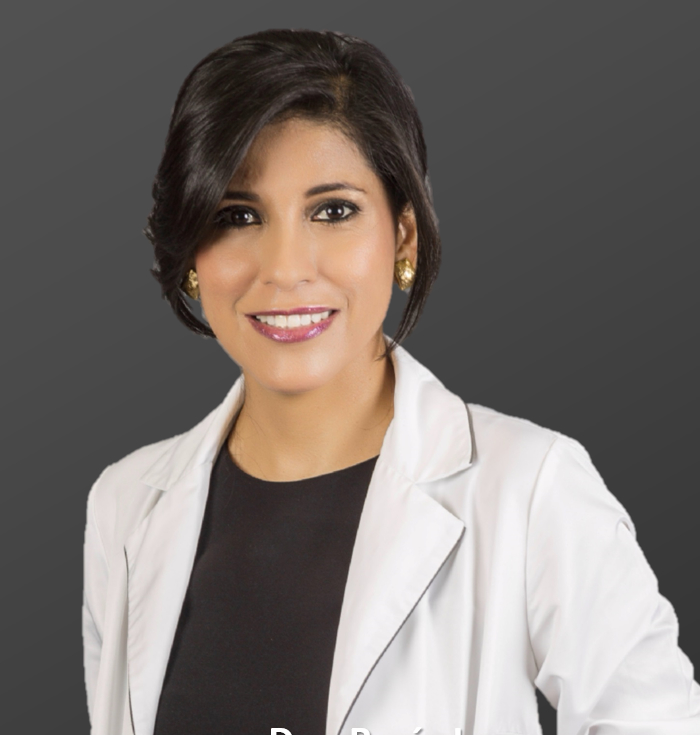
Dr Rocío Lazo is a professor on the Paediatric Dentistry Residency Program at Universidad Cientifica del Sur Dental School in Lima, Peru, and an invited professor on the Master's Programme in Paediatric Dentistry at the University of Barcelona. From 2022 to 2011, she was an ordinary professor at Cayetano Heredia University in Lima, Peru. She obtained her DDS in 1998 and qualified as a Specialist in Paediatric Dentistry in 2002 at Cayetano Heredia University in Lima, Peru. In 2011, she moved to San Francisco, USA, for one year and completed an internship in the Paediatric Dentistry Program at the University of California, San Francisco. She obtained her Master's degree in Paediatric Dentistry in 2015 at Universidad Cientifica del Sur Dental School in Lima, Peru.
Dr Rocío Lazo began conducting research in minimally invasive dentistry in 2004 and, in 2013, focused on bioactive materials in paediatric dentistry. She developed copyrighted protocols for guided enamel regeneration of white-spot lesions and molar incisor hypomineralisation, as well as a non-vital pulp therapy protocol for primary teeth using bioceramics for necrotic pulp, involving sealing only the pulp chamber and regeneration of furcation lesions (no more pulpectomy). In 2004, she co-authored the book “Caries dental en dientes deciduos y permanentes jóvenes”, published by Ripano. In 2010, she co-authored “Estomatología Pediátrica”, published by Editorial Ripano. In 2019, she co-authored “Manual de Procedimientos Clínicos en Odontopediatría”, published by Editorial Universo.
In 2004, 2010, 2011 and 2022, she received the prestigious Fundación Instituto Hipólito Unanue, Peru, award for best research in medical and dental science.
In 2017, she was invited to give a lecture, “Bioactive Materials in Paediatric Dentistry”, at the Royal Academy of Medicine and Related Sciences of Galicia, Spain.
Since 2014, Dr Rocío Lazo has been an international speaker on bioactive materials and minimally invasive paediatric dentistry in Europe, Asia, South Africa, the USA, Latin America and the Caribbean.